
Reading Time - 5 minutes
The First 5 Steps Every Family Should Take

5 Steps Every Family Should Take.png
Five actions that make the recruiting process more organized and less expensive.
Start with a family recruiting file
Keep one shared document with verified height, weight, wingspan, electronic 40 time, shuttle, jumps, track marks, GPA, graduation year, coach contact, Hudl link, and a short description of the athlete’s position. Update it after meaningful changes. Coaches should never have to hunt for the basics. Do not inflate a measurement: an inaccurate number can damage credibility the first time the player is tested in person.
Build two lists, not one
The first list is aspirational: schools the athlete dreams about. The second is evidence-based: schools with roster profiles, competitive level, academic fit, and geographic preferences that make sense. The second list should drive outreach and camp spending. Review both lists after every season, because a teenager can grow quickly, change positions, or improve dramatically.
A 30-minute family meeting
Ask the athlete what he wants from college beyond football. Then decide who owns each job: the player owns training, film review, and coach communication; parents help with transportation, budgets, deadlines, and perspective. Set one athletic goal, one football-skill goal, and one academic goal for the next 90 days. Revisit the plan monthly without turning every dinner into a recruiting meeting.
1. Get the athlete profile right
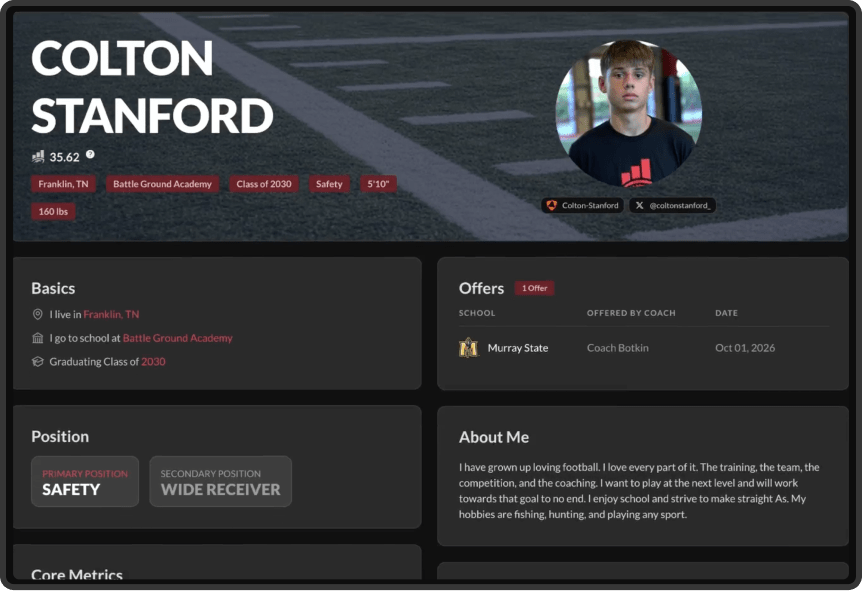
Record the correct graduation year, height, weight, position, school, GPA, and contact information. Use a professional photo and update the profile whenever something meaningful changes. Inconsistent information creates confusion and makes it harder for a coach to evaluate the athlete.
2. Build honest, useful film
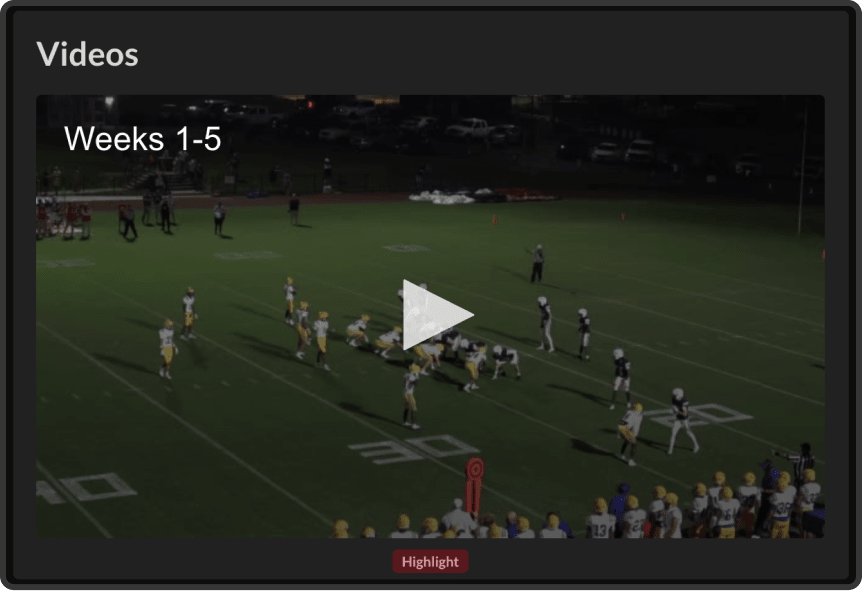
Start with the strongest relevant plays, identify the athlete clearly before each snap, and show position-specific skills. Do not rely on music, graphics, or long introductions. Keep access to full-game film because coaches may request it.
3. Verify athletic measurements
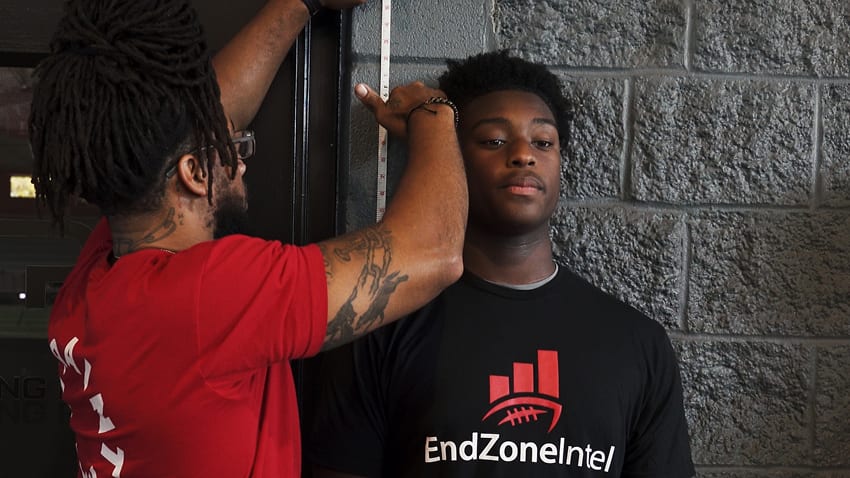
A hand-timed forty and an electronically timed forty are not interchangeable. Record the testing method and date. Combine verified speed, jumps, agility, and track results with game film rather than treating one number as the whole evaluation.
4. Build a balanced school list
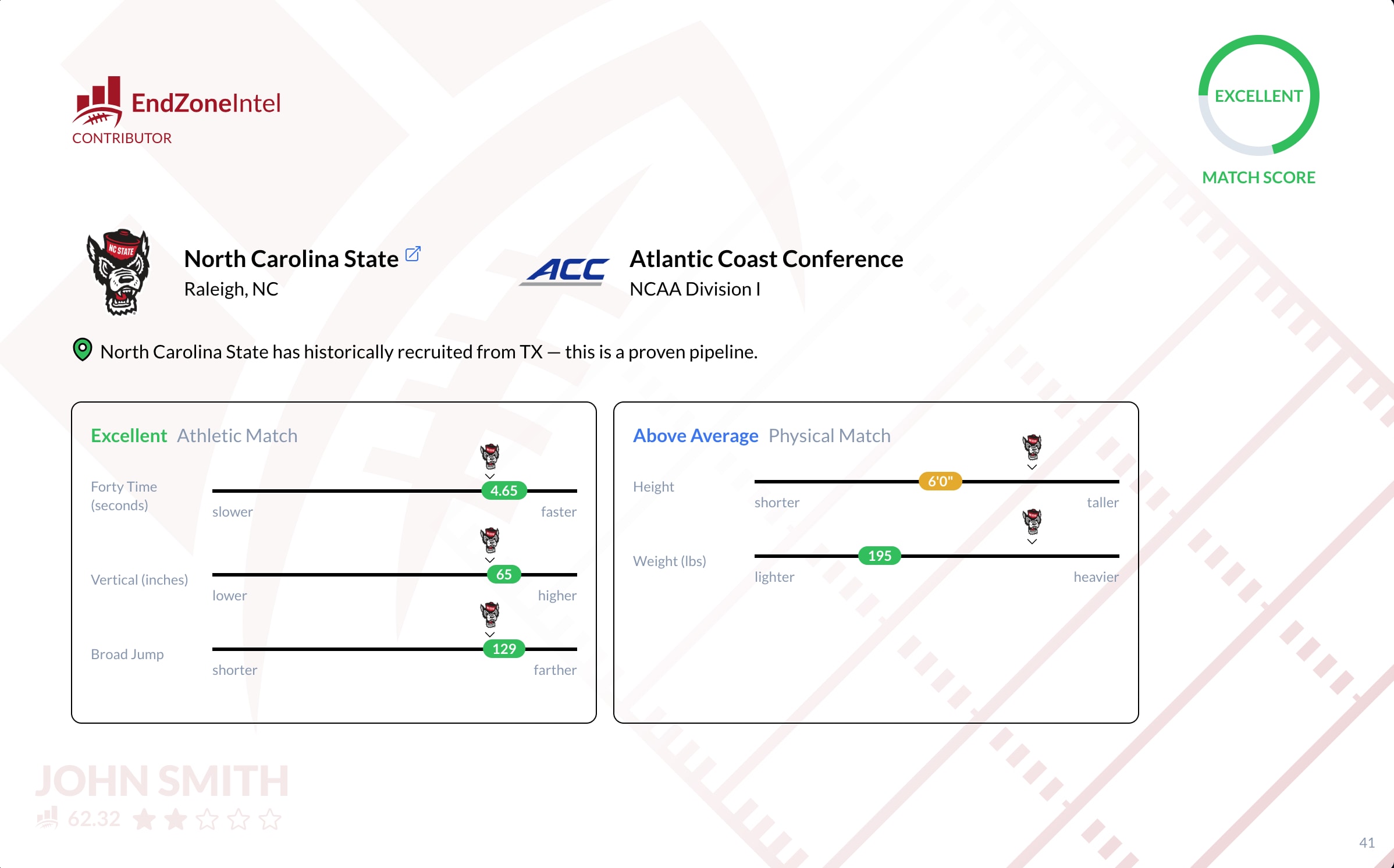
Include programs where the athlete may fit today, programs where continued development could make the athlete competitive, and a smaller number of ambitious targets. Consider academics, distance, cost, campus environment, and football needs—not just logos.
5. Make a repeatable plan
Schedule film updates, athletic retesting, coach outreach, school research, and academic check-ins. Review the list every few months. Recruiting is not one big event; it is a process of demonstrating improvement and finding the right fit.
Your next step with EndZoneIntel: Use EndZoneIntel to organize your measurements and build a school list grounded in your current and projected athletic profile.
 EndZoneIntel Staff
